Blown-in insulation in Watsonville CA - an attic covered evenly, edge to edge
Hot upstairs, cold floors or a power bill that keeps climbing? We fill the attic evenly so your house holds its temperature.
Request an estimate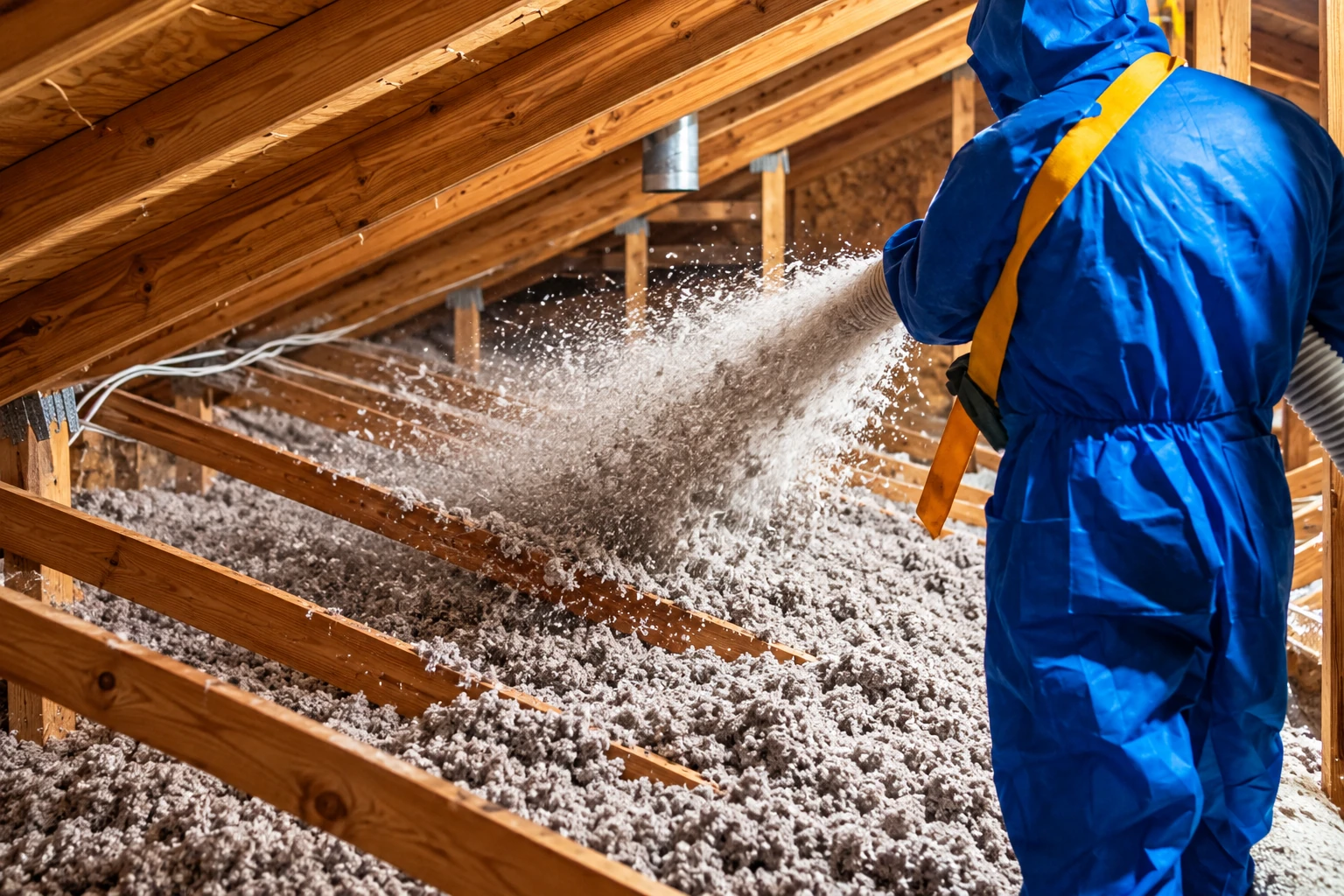
Is blown-in insulation right for my attic or walls?
Blown-in insulation is loose cellulose or fiberglass blown through a hose onto your attic floor or into the hollow spaces inside your walls, and for a lot of Watsonville houses it's the simplest way to fix a thin or empty attic so the house stops losing heat in winter and soaking it up in summer.
Plenty of older houses around here have little or no insulation in the attic, and that usually shows up as a drafty house or a room over the garage nobody wants to sit in. The price mostly comes down to how big the attic is, how many inches are already up there and what shape they're in, how much attic air sealing it needs first, and whether old material has to come out before anything new goes in. The schedule turns on that same prep, so an attic that's dry and easy to reach moves faster than one with wet insulation or old wiring to plan around. Your estimate gives you the figure for your house, written from what's actually in your attic and not a guess over the phone.
How we do blown-in insulation, prep first
I treat an attic like a kitchen station, so the prep is done before any insulation goes in. We go up and check what's there, and if there's live knob and tube, an early type of home wiring, we plan the job around it and keep insulation off it. Next we seal the gaps around pipes, can lights and the hatch so the new layer isn't fighting a draft, keep material back from flues and exhaust fans because they need clearance, and set baffles at the eaves so the vents stay clear and the attic keeps breathing. Then we blow it in thick enough that it won't settle into gaps, at an even depth all the way out to the edge of the wall framing instead of piled deep in the middle and thin at the edges.
If what's up there now is wet or has rodent mess in it, covering it up just keeps the problem, so we handle the insulation removal first. When the attic is only one part of a drafty house, we can look at walls, floors and the crawl space too as part of home insulation for the whole place.
Planning blown-in insulation in Watsonville
In Watsonville, the city's Building Inspection Division handles permits in one place, and its staff will explain the home improvement rules if you want to ask about your project, so that's where a permit question starts for a house inside city limits. Some homes with a Watsonville address actually sit outside the city, in unincorporated Santa Cruz County or Monterey County, so the city isn't always the right office. Before we set a date, we check with the office that covers your address, and when the job needs a permit, we pull it and line up the inspections.
A lot of the older houses we open up here have a few inches of matted insulation, some droppings and a hatch that leaks air, so the prep usually takes more of the visit than the blowing does. We see the same kind of attics on jobs in Santa Cruz and Salinas.
Blown-in insulation work up close
Get an estimate for blown-in insulation in your attic
We reply to every call and message within one business day. Then I come out, look at your attic in person and write a free estimate from what I see, with no obligation to go ahead.
(831) 666-1048Blown-in insulation questions from Watsonville
How much does blown-in attic insulation cost in Watsonville?
Across the US, installing blown-in attic insulation usually costs about $4 to $7.50 per square foot, and that's a national figure, not our price. Where your job lands depends on the attic's size, what's already up there and how much sealing and prep it needs first. I'll give you your own number once I've seen the attic.
What is the best way to insulate an attic, batts or blown-in?
For most attics blown-in is the better pick, because blowing loose fill is usually cheaper than laying batts and gives better coverage, though install prices vary from job to job. Loose fill flows around joists, wires and odd corners where batts leave gaps, which matters in older attics that were never framed evenly.
Should air leaks be sealed before blowing in insulation?
Yes, federal guidance says to seal the leaks between the attic and the house before insulating, because most insulation doesn't stop air from moving through it. Since the attic's open anyway, it makes sense to plan the sealing and the insulation as one job, and that's how we plan it.
Will blown-in insulation settle over time?
It can if it goes in too light, because blown-in insulation has to be installed dense enough to resist settling or it leaves holes and voids. Ask any crew you're comparing how they get the density right, and ask us the same when I'm out for the estimate.
How do I know if my recessed lights can be covered with insulation?
Only IC-rated recessed lights, the kind built to sit under insulation, should be covered, because they're airtight and made for it. There's usually a label inside the fixture that tells you, so it helps to check before the job, and if a light isn't rated, we plan around it instead of burying it.
Do I have to leave the house while you blow in insulation?
Usually you don't have to leave the house for blown-in insulation, and the kids and pets can generally stay home too. Loose fill doesn't come with the wait before you can go back inside that spray foam does, and we cover the path to the hatch and keep the dust up in the attic.
Call about blown-in insulation in Watsonville
Call (831) 666-1048 or use the form, and have your house's age and your ceiling light type handy, so I can plan around older walls and lights before I come out.